
 English
 русский
 中文简体
中文简体 Español
 Deutsch
 عربى
عربى

Where Are Athletic Tape Manufacturers Used in the Sports Supply Chain
Content
- 1 01 What Role Does an Athletic Tape Manufacturer Play in the Sports Supply Chain?
- 2 02 How Do Athletic Tape Manufacturers Work With Sports Distributors?
- 3 03 Where Do Athletic Tape Manufacturers Fit in Wholesale Supply?
- 4 04 How Do Athletic Tape Manufacturers Support Sports Retailers?
- 5 05 How Are Athletic Tape Manufacturers Connected With Sports Teams and Training Centers?
- 6 06 Can Athletic Tape Manufacturers Support Private Label and Custom Products?
- 7 07 Why Does Manufacturing Capability Matter Across the Supply Chain?
- 8 08 How Does the Athletic Tape Supply Chain Move From Manufacturer to User?
The sports supply chain includes many different businesses and users. A roll of athletic tape may look like a simple product, but it can pass through several stages before reaching an athlete.
An Athletic Tape Manufacturer sits near the production side of this chain. The manufacturer turns materials into finished tape and prepares products for different types of buyers. From there, the products may move to distributors, wholesalers, retailers, sports organizations, training centers, or other commercial users.

The role of the manufacturer is not limited to making the physical tape. Product design, material selection, packaging, quality checks, customization, and order planning can all be connected to manufacturing.
The position of the manufacturer also changes depending on the type of customer. A large sports distributor may purchase products in bulk. A retailer may need consumer-friendly packaging. A sports team may have more specific product requirements.
Understanding where manufacturers fit into the supply chain helps buyers understand how athletic tape moves from production to actual use.
01 What Role Does an Athletic Tape Manufacturer Play in the Sports Supply Chain?
The manufacturer handles the part of the supply chain responsible for turning product requirements into genuinely finished athletic tape.
This process starts with materials. The manufacturer needs to prep the materials that go into the tape and organize the production process around them. Once production wraps up, finished rolls get inspected, packed, stored, and prepped for shipment.
The exact production process shifts from manufacturer to manufacturer. The basic supply relationship, though, stays pretty consistent across the board.
| Supply Chain Stage | Typical Role |
|---|---|
| Material sourcing | Provides materials needed for production |
| Manufacturing | Turns materials into finished athletic tape |
| Quality checking | Reviews products against internal requirements |
| Packaging | Prepares products for storage and distribution |
| Distribution | Moves products toward different markets |
| Retail | Makes products available to end users |
| Sports organizations | Purchases tape for athletic activities |
The manufacturer might sell straight to a buyer, or work through another business sitting further along the supply chain.
For B2B customers, this distinction genuinely matters. A buyer purchasing directly from an Athletic Tape Manufacturer can hash out product structure, packaging, customization, and production requirements one-on-one.
A buyer purchasing through a distributor, though, ends up in a different kind of relationship entirely. The distributor's often already handling product storage, delivery, and customer service on their end.
Both models coexist just fine within the same sports market.
02 How Do Athletic Tape Manufacturers Work With Sports Distributors?
Distributors bridge manufacturers with multiple markets at once.
An Athletic Tape Manufacturer might produce for a distributor supplying sports retailers, training facilities, sports clubs, or other businesses scattered across the market. The distributor becomes the connective tissue between production and a much wider customer base.
This relationship tends to make the whole supply chain a lot more flexible.
Manufacturers get to focus purely on production. Distributors get to focus on market coverage, storage, order coordination, and customer relationships instead.
A distributor, say, might carry several types of athletic tape at once. Its own customers might include retailers and sports organizations with wildly different purchasing needs.
The manufacturer needs a real grasp of the distributor's product requirements here. Packaging, product labeling, product variety, and supply arrangements often all get discussed well before any order actually lands.
A stable communication process helps both sides manage changes as they come up.
If a distributor rolls out a new product category, the manufacturer needs to weigh whether the requested product can even get produced. If packaging needs shift, the manufacturing process needs adjusting right alongside it.
That turns the manufacturer into an active part of the supply chain, rather than some distant, faceless production source.
For distributors, manufacturing capability often becomes a genuinely important factor when picking an Athletic Tape Manufacturer. They need a supplier who can support several product types while still holding production steady and consistent.
03 Where Do Athletic Tape Manufacturers Fit in Wholesale Supply?
Wholesalers usually purchase products for resale to other businesses.
In the athletic tape market, a wholesaler may supply sports stores, fitness businesses, schools, training centers, medical supply businesses, or sports organizations.
The manufacturer provides the physical product. The wholesaler helps move that product toward smaller commercial buyers.
This relationship can be useful when customers do not want to manage direct factory purchasing.
A local or regional buyer may need athletic tape but may not want to place a large production order. A wholesaler can provide access to the product while handling part of the supply process.
Manufacturers therefore need to understand the needs of wholesale customers.
Wholesale buyers may pay close attention to:
- Product variety.
- Packaging formats.
- Order organization.
- Repeat supply.
- Private labeling.
- Product consistency.
- Communication.
- Shipping preparation.
The exact priorities vary by buyer.
A wholesaler serving sports retailers may need different packaging from a wholesaler supplying training organizations. The manufacturer needs to understand where the products will go after production.
This knowledge can influence how products are prepared.
04 How Do Athletic Tape Manufacturers Support Sports Retailers?
Retailers sit a lot closer to the end consumer in this whole chain.
An athletic tape product might reach a retailer through a distributor or wholesaler along the way. Some retailers, though, purchase straight from manufacturers instead.
The retailer then presents the product to athletes, coaches, fitness users, and other everyday customers.
Packaging becomes especially important at this stage. The product needs to be easy for customers to identify and understand at a glance. Product information also needs to line up cleanly with the intended use.
An Athletic Tape Manufacturer supports retailers by offering suitable product formats and packaging options tailored to that end.
Private-label production often factors into this relationship too. A retailer or sports company might want athletic tape carrying its own brand identity. The manufacturer can produce the tape while prepping packaging exactly to the buyer's specifications.
That builds a much closer connection between manufacturing and retail than people often assume exists.
Manufacturers also need to think through how products get handled once they leave the factory floor. Packaging needs to suit storage and transportation conditions. Individual rolls might need protection from damage during all that handling.
Details like these might seem small on the surface, but they genuinely shape how a product moves through the supply chain.
A retailer doesn't simply need athletic tape sitting in a box somewhere. It needs a finished product ready to be stored, displayed, sold, and used without a hitch.
05 How Are Athletic Tape Manufacturers Connected With Sports Teams and Training Centers?
Sports teams and training centers are direct users of athletic tape.
They may purchase through distributors or wholesalers. Some larger organizations may communicate directly with manufacturers when they have special product or packaging requirements.
The needs of these users can be different from those of retail customers.
A sports team may need athletic tape for regular training and competition preparation. A training center may use tape as part of its daily sports care supplies.
The purchasing process can therefore focus on practical use.
Users may want tape that is easy to handle and suitable for the body areas where it will be applied. They may also need products that fit into existing preparation routines.
For manufacturers, feedback from these users can be useful.
Direct users can explain how a product behaves during everyday sports activities. They may also identify preferences related to packaging, application, texture, or product format.
Manufacturers can use this information when discussing product development with commercial buyers.
This creates a two-way relationship. The supply chain does not simply move products from factories to athletes. Information can also move in the opposite direction.
User needs can influence product development, and product development can affect what becomes available in the sports market.
06 Can Athletic Tape Manufacturers Support Private Label and Custom Products?
Private-label products create another connection between manufacturers and the sports supply chain.
A buyer may have its own brand but may not operate a tape production facility. Instead, it can work with an Athletic Tape Manufacturer to produce the required product.
The manufacturer handles the production side while the buyer manages its own market position.
Customization can involve several areas.
| Customization Area | Possible Buyer Requirement |
|---|---|
| Product | Specific athletic tape type or structure |
| Packaging | Retail or bulk packaging |
| Labeling | Buyer-specific product information |
| Appearance | Product presentation suited to a market |
| Product range | Different tape types under one product line |
| Packing method | Format suited to distribution or retail |
The level of customization depends on the manufacturer's production capability.
A manufacturer with flexible production processes may be able to support a wider range of buyer requirements. However, buyers should discuss the details before placing an order.
Clear communication is particularly important for custom products. The buyer should explain the intended application, target market, packaging needs, and other relevant requirements.
The manufacturer can then determine how the product should be organized for production.
This process helps connect product development with actual market needs.
07 Why Does Manufacturing Capability Matter Across the Supply Chain?
Manufacturing capability affects more than production speed.
It can influence how a supplier handles product consistency, customization, quality management, packaging, and repeat orders.
These areas are connected.
A distributor may need several product formats. A retailer may need customized packaging. A sports organization may need regular supplies. Each buyer brings a different requirement into the same supply chain.
An Athletic Tape Manufacturer needs to manage these requirements without losing control of the production process.
Quality management is especially important.
The manufacturer may inspect materials before production and check finished products before shipment. The purpose is to make sure products remain aligned with the agreed requirements.
Good production organization can also help when buyers reorder the same product.
Repeat orders are common in B2B supply relationships. Buyers usually need the product to remain consistent with what they previously purchased.
Manufacturing capability provides the foundation for this type of relationship.
It also gives buyers more options when market needs change. A sports company may want to introduce new packaging. A distributor may want another product format. A retailer may expand its athletic care range.
A manufacturer with suitable production resources can discuss these changes with the buyer and determine what can be supported.
08 How Does the Athletic Tape Supply Chain Move From Manufacturer to User?
The path from manufacturer to athlete is not always the same.
One product may follow a direct route:
Manufacturer → Distributor → Retailer → Athlete
Another may use a wholesale channel:
Manufacturer → Wholesaler → Sports Store → Customer
A sports organization may purchase through a specialized supplier:
Manufacturer → Sports Supplier → Team or Training Center
A private-label product may follow another path:
Manufacturer → Brand Owner → Distributor → Retailer → Customer
These routes can overlap.
The important point is that an Athletic Tape Manufacturer forms the production base for each route.
The manufacturer needs to understand what happens after the product leaves the factory. This can affect packaging, labeling, order preparation, and product organization.
At the same time, buyers need to understand what the manufacturer can provide before building their own supply plans.
A clear supply chain depends on communication between its different participants.
For B2B buyers, questions about manufacturing can therefore be just as useful as questions about price or delivery. Buyers may want to understand where production takes place, how products are checked, whether customization is available, and how repeat orders are managed.
The answers can help buyers decide whether the supplier fits their purchasing model.
The sports tape market includes many different participants, but the manufacturer remains closely connected to the physical product itself. From material preparation and production to packaging and order support, manufacturing activities influence how athletic tape reaches distributors, wholesalers, retailers, teams, training centers, and individual users.
This makes the Athletic Tape Manufacturer an important link between product development and the wider sports supply chain.
Keep In Touch

No.455 New Town Development Road,Longgang City, Wenzhou City

 +86-0577-83728222
 +86-0577-837282222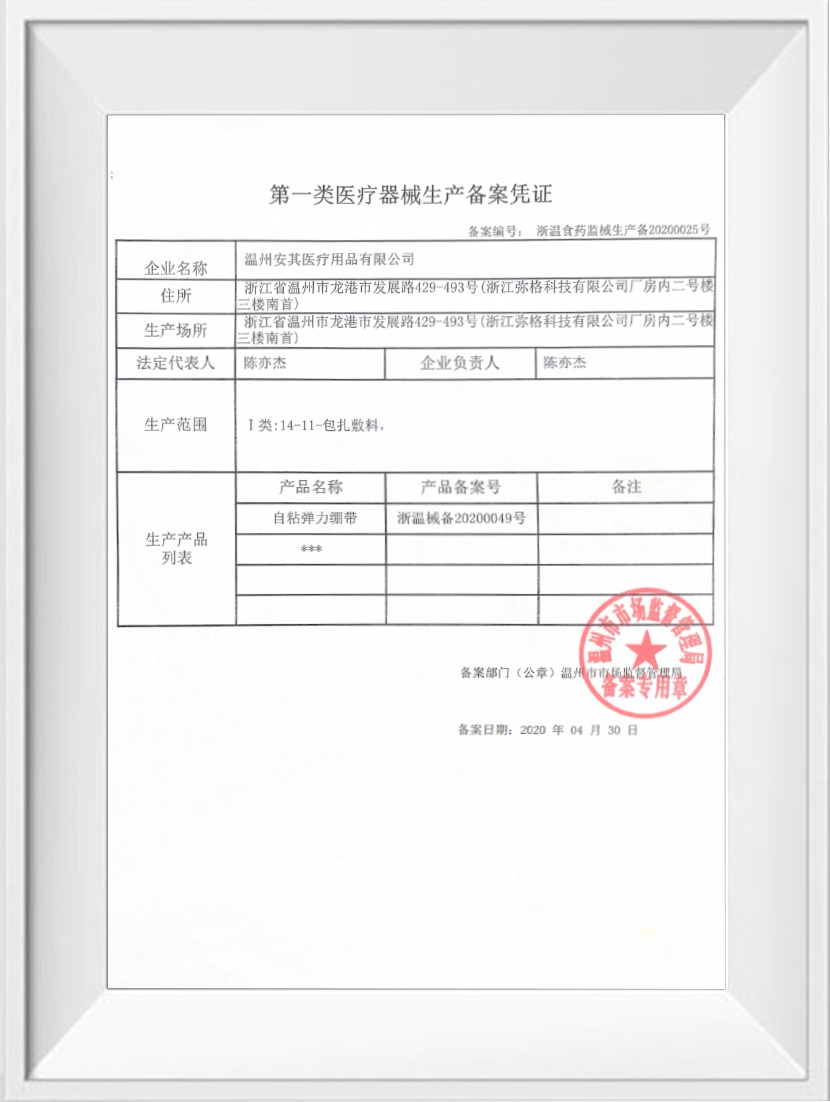
Copyright © Wenzhou Anqi Medical Supplies Co., Ltd. All Rights Reserved.
Approval No: Zhejiang Wenzhou Food and Drug Administration Machinery Production Filing No. 20200025
The information provided on this website is intended for use only in countries and jurisdictions outside of the People's Republic of China.
