
 English
 русский
 中文简体
 Español
 Deutsch
 عربى


Why Is Breathability a Challenge in Cohesive Bandage Design
Content
- 1 Why Does Breathability Matter in Cohesive Bandages?
- 2 What Makes Breathability Difficult to Achieve in Bandage Design?
- 3 How Do Material Selection and Fabric Structure Affect Airflow?
- 4 Can Strong Cohesion and Good Breathability Exist Together?
- 5 How Does Stretching Influence Breathability During Use?
- 6 What Role Does Moisture Management Play in Cohesive Bandage Comfort?
- 7 How Can Manufacturers Test and Improve Cohesive Bandage Breathability?
- 8 Are Market Expectations Changing the Way Cohesive Bandages Are Designed?
Cohesive bandages are widely used in sports care, first aid, physical support, and veterinary applications. Unlike ordinary adhesive bandages, they stick to themselves rather than relying on strong adhesion to the skin. This makes them useful for wrapping different body parts, securing dressings, and providing external support during physical activities.
However, a cohesive bandage needs to do more than stay in place. It also needs to allow air to circulate around the covered area. This is where product design becomes complicated. A bandage that provides stable wrapping and sufficient compression may restrict airflow. A more open structure may improve ventilation but could affect elasticity, strength, or holding performance.
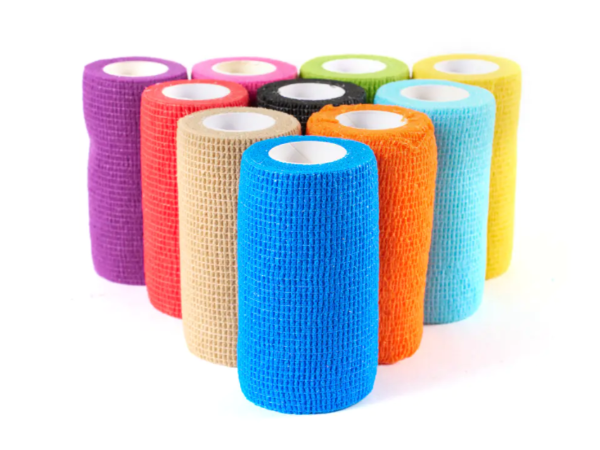
For cohesive bandage manufacturers, balancing these properties is an ongoing design challenge. Breathability influences wearing comfort, moisture management, and the overall user experience. At the same time, the bandage must maintain its structure and perform its intended function.
The difficulty lies in finding a suitable balance between fabric structure, material selection, elasticity, and cohesive properties. Understanding these factors helps explain why breathability is not simply a matter of making a bandage thinner or adding more openings to its surface.
Why Does Breathability Matter in Cohesive Bandages?
A cohesive bandage usually covers part of the body for a period of time. During this period, the skin continues to release moisture and heat. Physical activity can increase both, especially when the bandage is used around areas such as the ankles, wrists, knees, or elbows.
If the material does not allow enough air movement, heat and moisture may build up between the bandage and the skin. This can create a warm, damp feeling. Some users may also experience discomfort when the wrapped area becomes sweaty or remains covered for an extended period.
Breathability is therefore closely related to wearing comfort. It helps reduce the feeling of trapped heat and supports moisture movement away from the skin. This can be particularly relevant for athletes and people who need to remain active while wearing a bandage.
There are several reasons why this property matters:
- Moisture management: Air circulation can help reduce the accumulation of moisture beneath the wrapping.
- Thermal comfort: A breathable structure may help the covered area feel less hot.
- Skin contact: Reduced moisture buildup can make prolonged wear more comfortable.
- Daily usability: Users may find breathable products more suitable for activities that involve movement or sweating.
- Application experience: Material properties influence how the bandage feels during wrapping and after it is secured.
However, breathability should not be treated as a feature that works independently. A bandage also needs to provide suitable support, remain securely wrapped, and adapt to body movement. These requirements make product development more complicated than simply increasing airflow.
What Makes Breathability Difficult to Achieve in Bandage Design?
The main challenge comes from the way cohesive bandages are constructed and used.
A cohesive bandage is typically made from an elastic fabric or nonwoven material with a cohesive coating. The material allows the bandage to stretch around the body, while the coating helps adjacent layers stick together.
This structure creates several design requirements. The fabric needs enough openings or spaces to support air movement. At the same time, it must maintain sufficient contact between layers to prevent the bandage from slipping or becoming loose.
A tightly constructed fabric may provide a stable feel and good structural support, but it can limit airflow. A more open structure may improve ventilation, yet it can change how the material stretches, recovers, and holds together.
The cohesive coating adds another consideration. If the coating covers too much of the fabric surface, it may affect the movement of air and moisture through the material. If the coating is reduced without careful adjustment, the bandage may not provide the expected holding performance.
Manufacturers must therefore consider the relationship between several product features rather than developing each one separately.
| Design Factor | Potential Benefit | Possible Challenge |
|---|---|---|
| Open fabric structure | Supports air circulation | May affect material strength |
| Dense fabric structure | Provides a more compact feel | Can limit ventilation |
| Elastic material | Adapts to body movement | May create a warm feeling when tightly wrapped |
| Cohesive coating | Helps layers stay together | Can influence airflow through the material |
| Material thickness | Contributes to wrapping strength | May increase heat retention |
| Surface structure | Influences handling and contact | Requires a balance between comfort and holding ability |
The challenge is not that breathable materials are unavailable. It is that every adjustment can influence another part of the product's performance.
How Do Material Selection and Fabric Structure Affect Airflow?
Material selection is one of the most important decisions in cohesive bandage manufacturing. Different fibers and fabric structures have different levels of flexibility, softness, strength, and moisture management.
Woven, knitted, and nonwoven materials may all be used in bandage-related products. Each has its own structure and behavior.
Woven fabrics are formed through the crossing of yarns. Their construction can provide a stable structure, but the space between yarns depends on the material and weaving method. Manufacturers need to consider whether the resulting fabric offers enough flexibility and ventilation for the intended application.
Knitted materials are formed through connected loops. This structure can provide natural stretch and flexibility. It may also create spaces that support air movement. However, the material needs to maintain its shape during use and resist unwanted deformation.
Nonwoven materials are made by bonding or arranging fibers without traditional weaving or knitting. Their properties can vary according to fiber selection and manufacturing methods. Some structures may offer a soft feel and useful air permeability, while others are designed for greater density or strength.
The choice depends on what the finished bandage needs to do.
Manufacturers also need to consider fiber characteristics. Soft fibers may improve skin contact, while stronger fibers can help maintain the material's structure. The way different fibers are combined may influence the final balance between comfort, stretch, and ventilation.
Fabric thickness is another important factor. Thicker material may provide a more substantial wrapping feel, but it can also hold more heat. A thinner structure may improve comfort in some applications, although it must still offer sufficient strength for handling and wrapping.
This is why material selection should begin with the intended use of the cohesive bandage. A product designed for sports support may require different characteristics from one used to secure a dressing or provide light external wrapping.
Can Strong Cohesion and Good Breathability Exist Together?
Yes, but achieving both requires careful control of the material and coating structure.
Cohesive bandages are designed to stick to themselves rather than strongly adhere to the skin. This feature makes them convenient for wrapping and adjusting. Users can secure the bandage by overlapping layers without relying on traditional adhesive contact with the body.
However, the cohesive coating can influence the breathability of the finished product. Its coverage, distribution, and interaction with the base material all matter.
A coating that is too dense may block some of the spaces within the fabric. This can reduce the movement of air through the material. On the other hand, reducing the coating without considering its distribution may weaken the bond between overlapping layers.
Manufacturers need to find a coating arrangement that supports reliable cohesion while leaving enough room for air movement.
Several design considerations can help achieve this balance.
Controlled coating distribution
The cohesive material should be distributed in a way that supports layer-to-layer bonding without unnecessarily covering the entire fabric structure. Consistency is important because uneven coating can lead to differences in both adhesion and product feel.
Suitable base materials
The fabric should have a structure that supports ventilation while maintaining enough strength for normal use. The coating and base material need to work as a complete system.
Balanced layer contact
The bandage should hold together when wrapped, but its construction should not create unnecessary density. The relationship between fabric thickness, coating, and stretch needs to be evaluated during product development.
Application-based testing
The finished product should be tested in realistic wrapping conditions. A material may appear breathable when laid flat but behave differently when stretched and wrapped around a body part.
This last point is particularly important. Cohesive bandages are rarely used in their original flat form. They are stretched, overlapped, and wrapped around curved surfaces. These actions change the spaces within the material and can influence airflow.
How Does Stretching Influence Breathability During Use?
Elasticity is one of the defining features of cohesive bandages. It allows the material to adapt to different body shapes and provides a controlled wrapping experience.
However, stretching can also change the fabric structure.
When an elastic bandage is stretched, the distance between fibers or loops may increase in some areas. In other areas, the material may become thinner or more compact, depending on its construction. These changes can influence how air moves through the material.
The way the bandage is applied also matters. A loosely wrapped bandage may leave more space for air circulation, while a tightly wrapped one can compress the material and reduce ventilation.
This creates a connection between product design and user behavior. Even a bandage with a breathable structure may feel less comfortable if it is applied too tightly or wrapped in too many overlapping layers.
Different body parts also create different challenges.
Wrapping an ankle involves movement, changes in body shape, and repeated bending. A bandage around the wrist may experience frequent movement and contact with clothing. When used around a knee, the material needs to adapt to repeated bending and stretching.
Manufacturers should consider these conditions when evaluating their products. Testing only the material in an unstretched state may not provide a complete picture of its performance.
Practical testing can include:
- Evaluating airflow before and after stretching.
- Observing how the fabric structure changes during wrapping.
- Checking whether overlapping layers create excessive thickness.
- Assessing the wearing experience during movement.
- Comparing moisture buildup under different application conditions.
These checks help manufacturers understand how elasticity affects ventilation in actual use rather than relying only on the material's original structure.
What Role Does Moisture Management Play in Cohesive Bandage Comfort?
Breathability and moisture management are closely related, but they are not exactly the same.
Breathability generally refers to the ability of air to move through or around a material. Moisture management describes how the material handles sweat and moisture near the skin.
A bandage may allow some air movement but still retain moisture if its fibers absorb and hold water. Another material may move moisture away from the skin but provide limited airflow because of its dense structure.
For cohesive bandage manufacturers, both properties deserve attention.
Sweat is a natural part of physical activity. When the body becomes warm, moisture collects on the skin. If the wrapped area cannot release or manage this moisture, users may experience a damp sensation.
Excess moisture can also affect the wearing experience. The skin may feel sticky, and the bandage may become less comfortable during movement. Depending on the product construction, moisture may also influence the behavior of the cohesive coating.
Material choice plays an important role here. Some fibers absorb moisture, while others allow it to move across the surface or evaporate more easily. Fabric structure also affects how quickly moisture can escape.
Manufacturers should evaluate the complete material system rather than focusing only on one fiber property.
The application environment matters too. A bandage used during outdoor sports may face heat and sweat, while one used in a general first-aid setting may have different wearing conditions. Products intended for veterinary applications may also need to account for different movement patterns and handling requirements.
These differences make it difficult to define a single breathability standard for every cohesive bandage. Product requirements should reflect the conditions in which the bandage is expected to be used.
How Can Manufacturers Test and Improve Cohesive Bandage Breathability?
Product testing helps manufacturers understand whether their design choices produce the expected results. Breathability should be evaluated alongside cohesion, elasticity, strength, and wearing comfort.
Testing a single feature in isolation may overlook problems that appear when several product characteristics interact.
For example, a fabric may allow good airflow before coating. After the cohesive layer is applied, its ventilation behavior may change. Similarly, a product may perform well when flat but become less breathable after stretching and wrapping.
A complete testing process should therefore consider the finished product.
Air permeability evaluation
Manufacturers can assess how easily air passes through the material. This helps compare different fabric structures and identify how coating or thickness influences airflow.
Moisture-related testing
The product can be evaluated for moisture absorption, retention, and release. These observations help explain how the bandage may feel during prolonged wear or physical activity.
Stretch and recovery checks
The material should be assessed under stretching conditions. Manufacturers need to understand whether its structure remains stable and whether ventilation changes significantly during extension.
Cohesion testing
The bandage should maintain suitable contact between overlapping layers. A breathable design still needs to provide the holding function expected from a cohesive product.
Practical wear evaluation
User testing can provide information that laboratory checks may not capture. Feedback about heat, dampness, softness, and movement can help identify areas for improvement.
Quality control is equally important during mass production. Differences in raw materials, coating distribution, fabric density, and production conditions may cause variations between batches.
Manufacturers should maintain consistent inspection procedures and review product performance throughout production. If a change in material or coating affects airflow, it should also be checked for its influence on cohesion and elasticity.
This approach helps ensure that breathability is treated as part of overall product quality rather than an isolated marketing feature.
Are Market Expectations Changing the Way Cohesive Bandages Are Designed?
Customer expectations are expanding beyond basic wrapping and holding functions. Buyers now consider comfort, material properties, application needs, packaging, and product consistency when evaluating cohesive bandages.
Sports users may prefer materials that feel comfortable during movement and physical activity. Medical supply distributors may pay closer attention to product consistency, handling, and intended applications. Veterinary product buyers may have different requirements related to wrapping animals and accommodating their movement.
These differences are encouraging manufacturers to develop more application-specific products.
Customization is also an important part of the market. Brands may request different colors, widths, roll formats, material structures, and packaging styles. Some may prioritize a soft feel, while others may place greater emphasis on elasticity or holding performance.
For cohesive bandage manufacturers, customization requires a clear understanding of how each change affects the finished product. Increasing fabric openness, for example, may influence material strength. Changing the coating may affect both cohesion and airflow.
Sustainability is another consideration in product development. Material sourcing, production waste, and packaging choices are receiving more attention from buyers. However, any material change needs to be evaluated for its effect on product safety, comfort, and intended function.
Clear product information also matters. Buyers need to understand the material composition, intended use, application method, and relevant product characteristics. Manufacturers that communicate these details clearly can help distributors and brands make more informed purchasing decisions.
As the market develops, breathability is becoming part of a wider discussion about product usability. It is not simply about making a cohesive bandage feel cooler. It involves designing a product that manages air and moisture while retaining the elasticity, cohesion, and structural stability needed for its intended application.
Keep In Touch

No.455 New Town Development Road,Longgang City, Wenzhou City

 +86-0577-83728222
 +86-0577-837282222
Copyright © Wenzhou Anqi Medical Supplies Co., Ltd. All Rights Reserved.
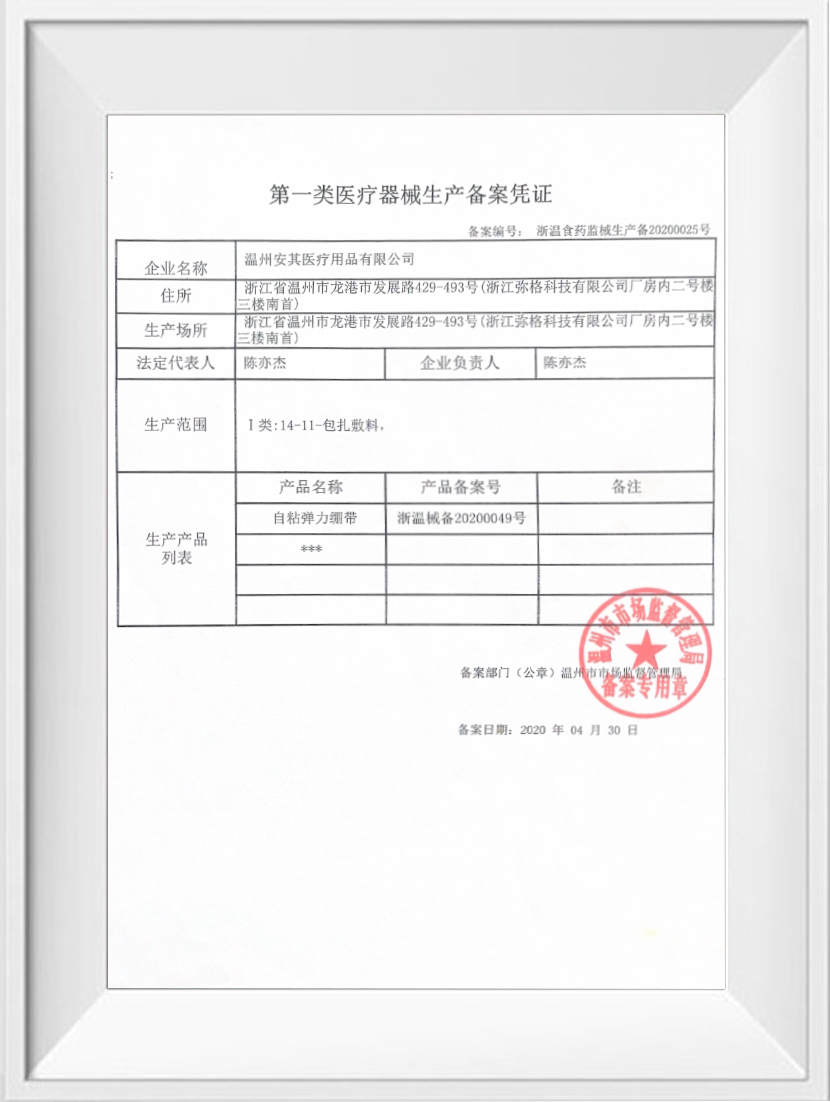
Approval No: Zhejiang Wenzhou Food and Drug Administration Machinery Production Filing No. 20200025
The information provided on this website is intended for use only in countries and jurisdictions outside of the People's Republic of China.
