
 English
 русский
 中文简体
中文简体 Español
 Deutsch
 عربى
عربى

How Does Die Cutting Shape Kinesiology Tape Production
Content
- 1 01 What Role Does Die Cutting Play in Kinesiology Tape Production?
- 2 02 How Does Pattern Design Affect Die Cutting?
- 3 03 Why Does Die Cutting Equipment Matter?
- 4 04 How Does Material Positioning Influence Cut Accuracy?
- 5 05 What Effect Does Die Cutting Have on Tape Edges?
- 6 06 How Can Die Cutting Improve Material Utilization?
- 7 07 Why Does the Cutting Direction Matter?
- 8 08 How Does Cutting Tool Design Influence Production?
- 9 09 Can Die Cutting Influence Production Waste?
- 10 10 How Does Die Cutting Support Pre-Cut Tape Production?
- 11 11 What Happens When Cutting Patterns Contain Curves?
- 12 12 How Can Edge Treatment Affect Finished Tape Shapes?
- 13 13 How Does Mass Production Change Die Cutting Requirements?
- 14 14 How Can Manufacturers Balance Pattern Complexity and Production Efficiency?
- 15 15 Why Is Inspection Important After Die Cutting?
- 16 16 How Does Die Cutting Fit Into Modern Kinesiology Tape Manufacturing?
Kinesiology tape may look simple once it's been cut into its finished shape, but producing that shape requires careful control throughout manufacturing, much like a cookie cutter needs a steady hand and consistent dough to produce matching shapes batch after batch. The cutting stage determines how the tape gets divided from a larger roll or sheet, how each piece follows its intended pattern, and how cleanly the finished edges actually appear once separated.
Die cutting proves particularly useful when a manufacturer needs to produce repeated tape shapes at scale without cutting each one by hand. Instead of cutting every piece separately, a prepared cutting tool can create the same pattern across continuous material run after run. This makes the cutting stage closely connected with production speed, material use, edge condition, and product consistency across a whole batch.
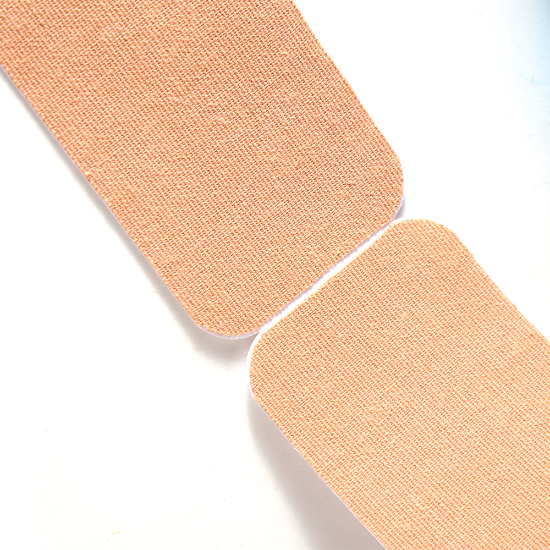
For an Athletic Tape Manufacturer, die cutting is therefore more than a simple separation process tacked onto the end of a line. The equipment, cutting pattern, material arrangement, and production sequence all influence how a pre-cut tape product moves from raw material to finished form.
01 What Role Does Die Cutting Play in Kinesiology Tape Production?
Die cutting separates tape material into planned shapes according to a fixed design. The cutting tool follows a defined pattern so each piece can get produced with a similar outline during repeated production runs.
This approach proves useful when a product contains several shaped sections, rather than one simple strip running end to end. A pre-cut design may include curves, narrow sections, wider areas, or connected shapes that would be genuinely difficult to reproduce efficiently through manual cutting alone.
| Die Cutting Stage | Main Production Function |
|---|---|
| Pattern preparation | Defines the intended tape shape |
| Material positioning | Places the tape correctly for cutting |
| Cutting | Separates the designed sections |
| Waste removal | Removes unwanted surrounding material |
| Inspection | Checks the finished cut shape |
The cutting process also creates a genuine connection between design and manufacturing that's easy to overlook. A pattern that looks suitable on a drawing still needs to work with the physical material and cutting equipment sitting on the shop floor.
This means manufacturers need to consider the entire process together, rather than designing a shape independently from the production it'll eventually go through.
02 How Does Pattern Design Affect Die Cutting?
Pattern design determines where the cutting tool will actually travel through the material as it works. Simple shapes generally create fewer changes in direction, while more detailed patterns require the cutting system to follow additional curves and transitions along the way.
These differences can affect how smoothly the material moves through production overall. A narrow section may need more careful handling than a broad section because there's less surrounding material supporting it during separation.
Pattern designers can consider several areas as they sketch out a new shape. Overall shape matters, along with curve direction, narrow sections, corner transitions, distance between adjacent pieces, and waste areas surrounding the pattern itself.
A well-planned pattern can make the cutting process a lot easier to organize on the production floor. It can also help manufacturers arrange several pieces across the available material without creating unnecessary unused areas that go to waste.
For products such as Kinesio Pre Cut Knee Support Tape, the relationship between the intended shape and the cutting process becomes particularly important, since the finished pieces need to retain their planned outline throughout production without drifting.
03 Why Does Die Cutting Equipment Matter?
The equipment determines how the prepared cutting pattern actually gets transferred to the tape material during a run. Different production systems may use different arrangements for feeding, positioning, cutting, and removing finished pieces from the line.
The equipment needs to work with the material being processed, not fight against it. If the material shifts during cutting, the resulting shapes may not remain aligned with the intended pattern the designer had in mind.
A production line may therefore include several connected functions working in sequence.
| Equipment Function | Production Consideration |
|---|---|
| Material feeding | Keeps the material moving into the cutting area |
| Position control | Helps maintain pattern alignment |
| Cutting unit | Creates the selected shape |
| Waste separation | Removes surrounding material |
| Collection system | Organizes finished pieces |
The equipment should also fit the production method being used. A small production run may have genuinely different requirements from continuous manufacturing running around the clock.
For an Athletic Tape Manufacturer, choosing a suitable die-cutting arrangement can help connect pattern design with repeatable production without adding unnecessary processing steps along the way.
04 How Does Material Positioning Influence Cut Accuracy?
Before cutting begins, the tape material needs to remain in a suitable position relative to the tool. Even a well-designed pattern can produce inconsistent results if the material shifts during the cutting process itself.
Movement may change the relationship between the cutting tool and the material sitting beneath it. This can affect the position of curves, edges, and narrow sections in ways that show up later.
Material positioning can be influenced by feeding direction, material tension, surface movement, alignment with the cutting pattern, and the transition between production stages as the tape moves through the line.
These factors need to work together rather than in isolation. Excessive movement can make alignment difficult to maintain, while an unsuitable feeding arrangement can create unnecessary stress in the material itself.
A stable production path gives the cutting system a lot more predictable surface to work on throughout a run. This can make repeated cutting genuinely easier to manage across longer production runs stretching over hours.
05 What Effect Does Die Cutting Have on Tape Edges?
The edge of a pre-cut tape piece gets directly influenced by the cutting process that produced it. A clean separation can create a defined outline, while an unsuitable cutting condition may leave irregular areas along the edge instead.
Edge treatment becomes particularly noticeable when the pattern contains curves or narrow transitions that ask more of the tool. The cutting tool needs to follow the intended outline without creating unnecessary damage around the surrounding material as it works.
The edge can influence how the finished product looks and how easily individual pieces can get separated during later processing steps.
| Edge Condition | Production Concern |
|---|---|
| Clean edge | Maintains the intended pattern |
| Irregular edge | May indicate cutting inconsistency |
| Damaged section | Can affect finished shape |
| Uneven separation | May complicate material handling |
| Excess surrounding material | Can increase waste during processing |
Edge quality should therefore get considered as part of the cutting process itself, rather than as a separate finishing step tacked on afterward. Manufacturers can inspect cut edges together with the overall pattern to identify whether the cutting method is genuinely working as intended.
06 How Can Die Cutting Improve Material Utilization?
Material utilization counts as an important manufacturing consideration because tape usually begins as a larger roll or sheet that must get divided into smaller finished pieces one way or another. The arrangement of cutting patterns determines how much material becomes part of the finished product and how much remains outside the selected shapes.
A pattern layout with large gaps between pieces can leave more unused material sitting around unused. A carefully arranged layout can place pieces closer together while still allowing the cutting tool to separate them properly without interference.
Several factors influence this arrangement across a batch.
| Layout Factor | Effect on Material Use |
|---|---|
| Shape complexity | Changes how pieces can be positioned |
| Piece orientation | Influences available space |
| Gap between patterns | Affects surrounding waste |
| Material width | Determines possible layout options |
| Cutting sequence | Can influence production organization |
Material utilization doesn't mean placing every possible shape into the smallest area available. The layout also needs to support reliable cutting and convenient separation once the pattern is set.
A very crowded arrangement may make production genuinely harder to control on the floor. The useful layout is one that balances material use with the practical needs of the cutting process running behind it.
07 Why Does the Cutting Direction Matter?
The direction in which material moves through the cutting process can affect how a pattern actually gets arranged across a sheet. Tape material has its own length and width, and a finished shape may respond quite differently depending on how it's positioned within that structure.
This becomes more noticeable when the pattern contains long sections or directional features that favor one orientation. Manufacturers can consider whether several pieces should follow the same orientation or whether rotating the pattern can make better use of the available material instead.
The decision can affect both production layout and waste generation across a run. A pattern with a curved side, for example, may fit differently when placed beside another piece in the same direction than when alternating its orientation piece by piece.
The cutting plan therefore involves both shape design and spatial arrangement working together. This relationship proves useful when producing China Kinesiology Tape, where manufacturers may need to organize repeated patterns across continuous material while maintaining a consistent cutting sequence throughout.
08 How Does Cutting Tool Design Influence Production?
The cutting tool needs to match the pattern it's intended to create on the material. Its shape, arrangement, and interaction with the material all influence how the finished pieces actually get separated from the sheet.
A simple outline may require a relatively straightforward cutting path for the tool to follow. A pattern with several curves and transitions can place genuinely different demands on the cutting tool as it works through a run.
The tool also needs to hold up under repeated production over time. As the same pattern gets used again and again, manufacturers need to monitor whether the cutting process continues to produce the intended shape consistently.
Tool condition can be reviewed through edge condition of finished pieces, shape consistency across a batch, separation behavior, alignment of repeated patterns, and condition of surrounding material left behind. Regular observation can help production teams identify changes before they affect a larger quantity of finished material downstream.
The cutting tool is therefore genuinely part of the manufacturing system, rather than simply an accessory bolted onto the machine.
09 Can Die Cutting Influence Production Waste?
Waste gets created whenever material outside the finished pattern is removed from the sheet. The amount depends partly on the shape of the product and how the patterns get arranged across the material available.
A design with complex curves may leave irregular spaces between adjacent pieces that are hard to use. These spaces may prove difficult to use for another part sitting nearby in the layout.
Manufacturers can reduce unnecessary waste by considering the layout during the design stage itself, rather than after the pattern is already locked in. This may involve testing different orientations or arranging several patterns together before the cutting tool ever gets prepared.
| Production Choice | Possible Waste Effect |
|---|---|
| Compact pattern layout | Uses available material more efficiently |
| Large gaps | Leaves more unused material |
| Alternating shapes | May improve space use for some patterns |
| Poor alignment | Can create unnecessary waste |
| Pattern redesign | May change the amount of surrounding material |
The aim isn't simply reducing every unused section down to nothing. The cutting layout must still allow the material to move correctly and the finished pieces to get separated without difficulty along the way.
This balance becomes a lot more important as production volume increases, because small layout differences can affect the overall amount of material processed across thousands of pieces.
10 How Does Die Cutting Support Pre-Cut Tape Production?
Pre-cut tape changes the production process because the final product already has a planned shape well before it reaches the user's hands. Instead of supplying one continuous strip that must get shaped later by someone else, the manufacturer creates individual sections right during production.
This can simplify later handling considerably when the product requires a defined pattern for its intended use. Kinesio Pre Cut Knee Support Tape offers a good example of a product where the cutting stage stays closely connected with the final product form throughout.
The cutting pattern needs to match the intended shape, while the production process needs to keep each piece organized as it moves through the line. The result depends on several connected stages moving in sequence: material preparation leads into pattern alignment, pattern alignment leads into die cutting, die cutting leads into waste separation, and waste separation leads into shape inspection at the end.
Each stage can influence the next one down the line. If the material isn't positioned properly, the cutting result can change unexpectedly. If waste removal is poorly controlled, finished pieces may become genuinely difficult to separate cleanly.
This makes die cutting a genuinely important part of pre-cut product manufacturing overall.
11 What Happens When Cutting Patterns Contain Curves?
Curved patterns require the cutting tool to change direction continuously as it moves through the material. The material also needs to remain stable while the tool follows the intended outline without drifting off course.
A gradual curve may be relatively easy to process without much fuss. A pattern containing several narrow turns can require a lot closer attention to the cutting path as it winds through.
The surrounding layout matters just as much in this situation. Curved pieces can create spaces that are difficult to fill with another pattern, which can affect material utilization across the whole sheet.
Designers can review the entire pattern rather than looking only at the final outline in isolation. Questions may include whether the curve can be cut consistently run after run, whether nearby pieces can be positioned efficiently around it, and whether the surrounding waste can be removed without disturbing the finished piece sitting next to it.
This type of review connects product design with actual manufacturing conditions on the floor, rather than leaving that connection to chance.
12 How Can Edge Treatment Affect Finished Tape Shapes?
Edge treatment stays closely connected with how the cutting tool separates the tape from the surrounding material during a run. The finished edge should follow the intended outline without unnecessary deformation creeping in along the way.
This proves particularly important for shapes with narrow ends or curved transitions that ask more of the material. If the cutting process places too much stress around a narrow area, the material may change position during separation and throw off the final shape.
A similar issue can occur when surrounding waste gets removed from a delicate pattern too roughly. Manufacturers can therefore inspect both the cut edge and the area immediately around it for signs of trouble.
A useful inspection may consider the shape of the finished outline, the condition of curved sections, the condition of narrow areas, separation from surrounding waste, and consistency across repeated pieces coming off the line. These observations can help identify whether changes are needed in pattern preparation, material positioning, or cutting conditions somewhere in the process.
13 How Does Mass Production Change Die Cutting Requirements?
Mass production places genuinely greater importance on repeatability because the same cutting process may get repeated across a large quantity of material over a full shift. A small issue that appears once may become a real production concern if it continues across repeated cutting cycles unnoticed.
Manufacturers therefore need to consider the relationship between equipment operation, material feeding, tool condition, and inspection as one connected whole. A production workflow may include several checks built into the routine.
| Production Stage | Area to Monitor |
|---|---|
| Material loading | Correct material positioning |
| Pattern setup | Alignment with the intended layout |
| Cutting | Shape and edge condition |
| Waste removal | Clean separation |
| Finished-piece inspection | Consistency of cut patterns |
The purpose of these checks isn't making the process complicated for its own sake. They help production teams understand where changes may occur and keep the cutting process connected with the intended product design throughout a run.
For an Athletic Tape Manufacturer, this becomes especially relevant once several pre-cut shapes get produced using similar materials and equipment side by side on the same line.
14 How Can Manufacturers Balance Pattern Complexity and Production Efficiency?
A more detailed shape isn't automatically more difficult to manufacture just because it looks intricate on paper. Every additional curve, narrow section, or directional change can influence the cutting layout in some way worth noting.
The design team can work with production staff to consider whether the intended shape can actually get reproduced smoothly through the available cutting process on hand. This cooperation can help identify practical adjustments well before production ever begins in earnest.
A pattern review can cover the overall outline, curved sections, narrow areas, piece arrangement, waste spaces, cutting sequence, and separation method all together. This approach allows the product shape and manufacturing process to develop together, rather than as two separate tracks that only meet at the end.
For China Kinesiology Tape, the same principle applies when manufacturers prepare different pre-cut patterns for production runs. The cutting method should support the intended product form without creating unnecessary steps in the manufacturing flow that slow things down.
15 Why Is Inspection Important After Die Cutting?
Inspection provides a genuine way to check whether the finished pieces still match the intended pattern after everything's cut and separated. A visual review can identify irregular edges, incomplete separation, misplaced cuts, or differences between repeated pieces coming off the same run.
The inspection process can get organized around the characteristics that actually matter to the product in question.
| Inspection Point | What to Check |
|---|---|
| Shape | Does the piece follow the intended outline? |
| Edges | Are the cut boundaries reasonably consistent? |
| Curves | Do curved sections retain their planned form? |
| Narrow areas | Are delicate sections properly separated? |
| Material surface | Is the surrounding material in suitable condition? |
| Repeated pieces | Do comparable pieces maintain a similar shape? |
Inspection also provides genuinely useful feedback for the production process going forward. If an issue appears repeatedly in one section of a pattern, the manufacturing team can examine the relationship between the tool, material movement, and pattern layout to find the root cause.
This makes inspection part of process control throughout the run, rather than simply a final activity tacked on at the very end.
16 How Does Die Cutting Fit Into Modern Kinesiology Tape Manufacturing?
Die cutting connects product design with physical production in a way that's hard to separate cleanly. The finished shape begins as a pattern on paper, but that pattern must then get transferred accurately through material feeding, cutting, separation, and inspection before it's anything more than an idea.
The process also influences material utilization and production organization across a whole facility. For Kinesio Pre Cut Knee Support Tape, the relationship stays especially clear because the finished product depends on a predefined shape, rather than a simple continuous strip cut on demand.
At the same time, manufacturers producing China Kinesiology Tape may need to manage different shapes, layouts, and production arrangements according to their product range spread across a catalog. An Athletic Tape Manufacturer can therefore view die cutting as part of a wider manufacturing system rather than a standalone step.
Pattern design, equipment selection, material positioning, edge treatment, waste separation, and repeated production all interact throughout the process in ways worth tracking together. When these stages get planned together from the start, the cutting operation becomes a lot easier to connect with the intended product shape and the practical requirements of continuous manufacturing running day after day.
Keep In Touch

No.455 New Town Development Road,Longgang City, Wenzhou City

 +86-0577-83728222
 +86-0577-837282222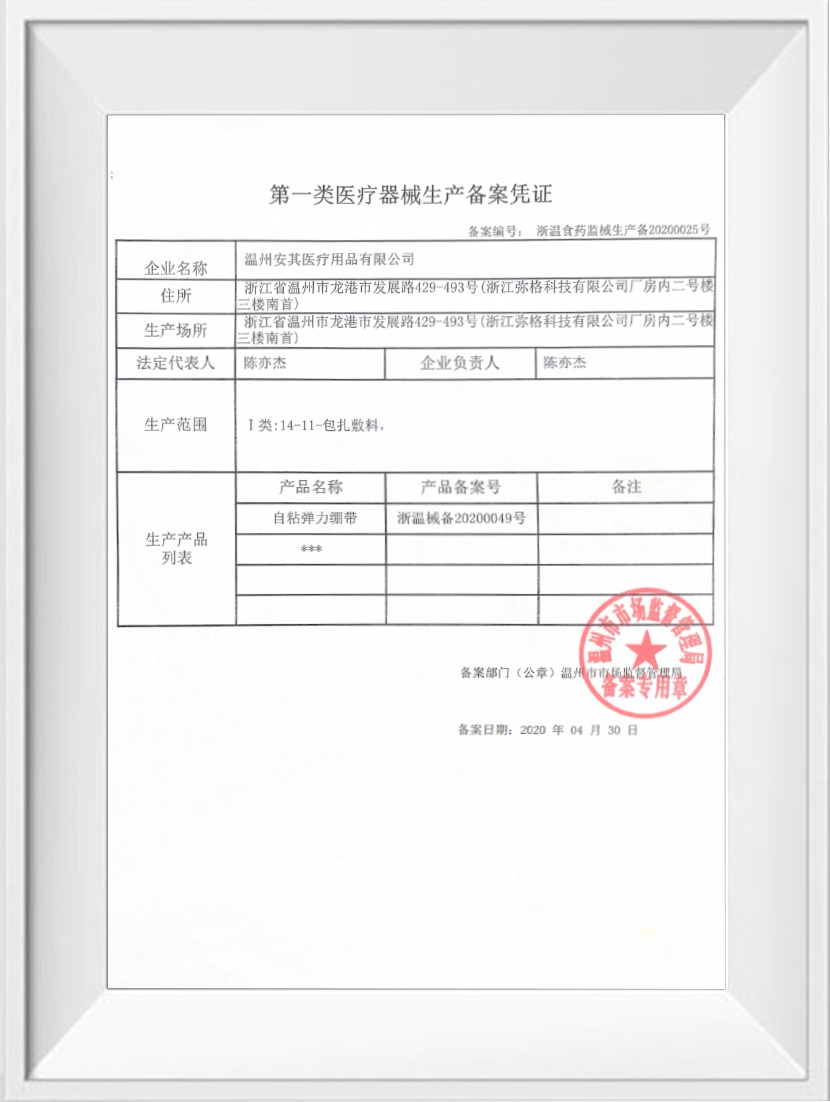
Copyright © Wenzhou Anqi Medical Supplies Co., Ltd. All Rights Reserved.
Approval No: Zhejiang Wenzhou Food and Drug Administration Machinery Production Filing No. 20200025
The information provided on this website is intended for use only in countries and jurisdictions outside of the People's Republic of China.
