
 English
 русский
 中文简体
中文简体 Español
 Deutsch
 عربى
عربى

Common Types of Sports Kinesiology Tapes
Content
Sports kinesiology tapes are widely used in athletic training, rehabilitation, and general fitness support. They are designed to assist movement, provide support to muscles and joints, and help manage discomfort during physical activity. Unlike rigid athletic tapes, kinesiology tapes are elastic and intended to move with the body. Over time, several common types of sports kinesiology tapes have developed to meet different functional needs, skin sensitivities, and environmental conditions. This essay introduces the main types of sports kinesiology tapes, explains their characteristics under clear subheadings, and summarizes key differences in a comparison table.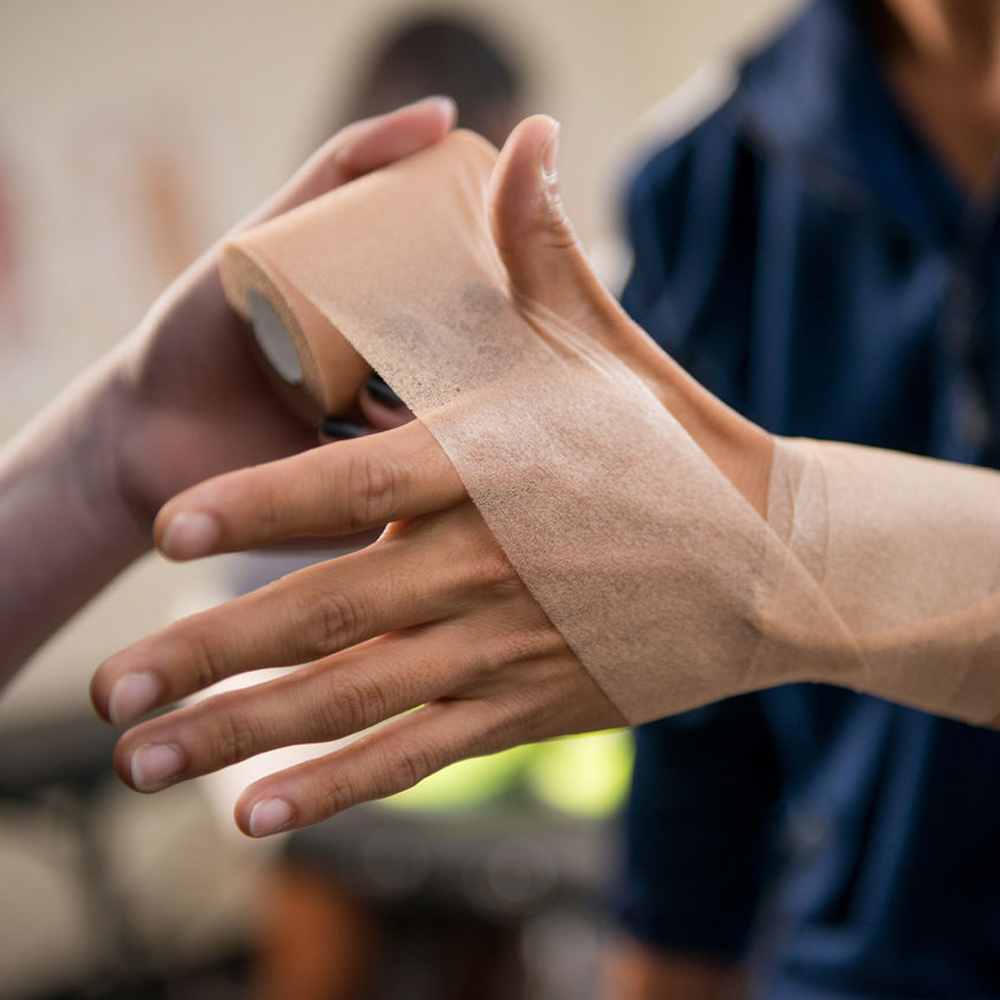
Cotton-Based Kinesiology Tapes
Cotton-based kinesiology tapes are among the widely used types in sports and rehabilitation settings. These tapes are made primarily from woven cotton fibers combined with an elastic component that allows the tape to stretch along its length.
Key features of cotton-based kinesiology tapes include:
- Moderate elasticity that supports natural joint and muscle movement
- Good breathability, which helps reduce moisture buildup on the skin
- A soft texture that is generally suitable for extended wear
- Compatibility with skin-friendly acrylic adhesives
These tapes are commonly used for:
- Muscle support during running, weight training, and team sports
- Joint assistance for knees, shoulders, ankles, and wrists
- Post-exercise muscle tension management
Cotton kinesiology tapes are often chosen for daily training and rehabilitation because they balance support, comfort, and general durability. However, they may absorb moisture more easily than synthetic alternatives, which can affect adhesion during heavy sweating or water exposure.
Synthetic or Nylon Kinesiology Tapes
Synthetic kinesiology tapes are primarily made from nylon, polyester, or blended synthetic fibers. These materials offer different performance characteristics compared with cotton-based tapes.
Typical characteristics of synthetic kinesiology tapes include:
- Higher resistance to water and sweat
- Faster drying compared with cotton
- Smoother surface texture
- Stable elasticity over repeated use
These properties make synthetic tapes suitable for:
- Swimming and water sports
- Outdoor sports under humid conditions
- Long training sessions with heavy perspiration
Synthetic kinesiology tapes are often selected by athletes who train in wet environments or require longer-lasting adhesion. However, some users may find the surface texture less soft than cotton-based options, especially during prolonged contact with sensitive skin.
Pre-Cut and Pre-Shaped Kinesiology Tapes
Pre-cut kinesiology tapes are manufactured in standardized strip lengths, such as I-strips, Y-strips, X-strips, or fan shapes. These tapes eliminate the need for manual cutting before application.
Advantages of pre-cut kinesiology tapes include:
- Consistent size and shape for repeatable applications
- Reduced preparation time
- Lower risk of uneven edges that may peel early
- Convenient use for beginners and home users
Pre-shaped tapes are often applied to commonly treated areas such as:
- Knees and shoulders
- Lower back and spine
- Calves and hamstrings
Because these tapes are designed for specific body zones, they help simplify application for users with limited taping experience. However, their standardized shapes may not fit every body type or injury pattern equally well.
Sensitive-Skin and Hypoallergenic Kinesiology Tapes
Sensitive-skin kinesiology tapes are developed for users who experience irritation with standard adhesives. These tapes typically use modified low-irritation acrylic adhesives and softer backing materials.
Key characteristics include:
- Reduced adhesive strength to minimize skin stress
- Lower risk of redness or itching
- Easier removal with less discomfort
These tapes are often recommended for:
- Children and elderly users
- People with known adhesive sensitivities
- Repeated taping over the same area
- While sensitive-skin tapes improve comfort, they may not hold as long as standard kinesiology tapes during high-intensity activity. As a result, they are often used in light training, rehabilitation, or everyday movement support rather than competitive sports.
Rigid and Hybrid Support Tapes
Although kinesiology tapes are defined by elasticity, some products combine elastic and rigid elements to provide partial motion restriction. These hybrid support tapes offer controlled stability while still allowing limited movement.
Typical applications include:
Joint stabilization where full immobilization is not required
Transitional support during injury recovery
Activities involving repetitive stress on a specific joint
Hybrid tapes may include elastic zones for muscle movement and non-elastic zones for joint control. They occupy a middle ground between traditional athletic tape and fully elastic kinesiology tape.
Comparison Table of Common Kinesiology Tape Types
The following table summarizes the main differences among common sports kinesiology tape types:
|
Tape Type |
Main Material |
Key Characteristics |
Typical Uses |
|
Cotton-based tape |
Cotton with elastic |
Breathable, soft, moderate water resistance |
General sports support, daily training |
|
Synthetic/nylon tape |
Nylon or polyester |
Water-resistant, fast drying |
Swimming, outdoor sports, humid environments |
|
Pre-cut/pre-shaped tape |
Cotton or synthetic |
Fixed sizes and shapes, easy application |
Knees, shoulders, home rehabilitation |
|
Sensitive-skin tape |
Soft synthetic |
Low-irritation adhesive, easy removal |
Children, elderly, repeated use |
|
Hybrid support tape |
Mixed materials |
Partial rigidity with elastic zones |
Joint stabilization, recovery support |
This comparison highlights how material composition and structural design influence tape performance across different conditions.
How Different Types Are Selected in Practice
The selection of sports kinesiology tape depends on several factors rather than personal preference alone. Users and practitioners typically consider:
Type of activity: Water sports and endurance training often require water-resistant synthetic tapes.
Skin condition: Sensitive-skin versions are preferred for medically fragile users or those with adhesive reactions.
Support requirement: General muscle assistance may use cotton tape, while joint-focused recovery may require hybrid designs.
Application frequency: Pre-cut tapes are useful when repeated taping is required with consistent placement.
Environmental conditions, such as temperature and humidity, also influence tape choice. In hotter climates, quick-drying synthetic tapes tend to remain in place longer, whereas cotton tapes may perform better in dry indoor settings.
Keep In Touch

No.455 New Town Development Road,Longgang City, Wenzhou City

 +86-0577-83728222
 +86-0577-837282222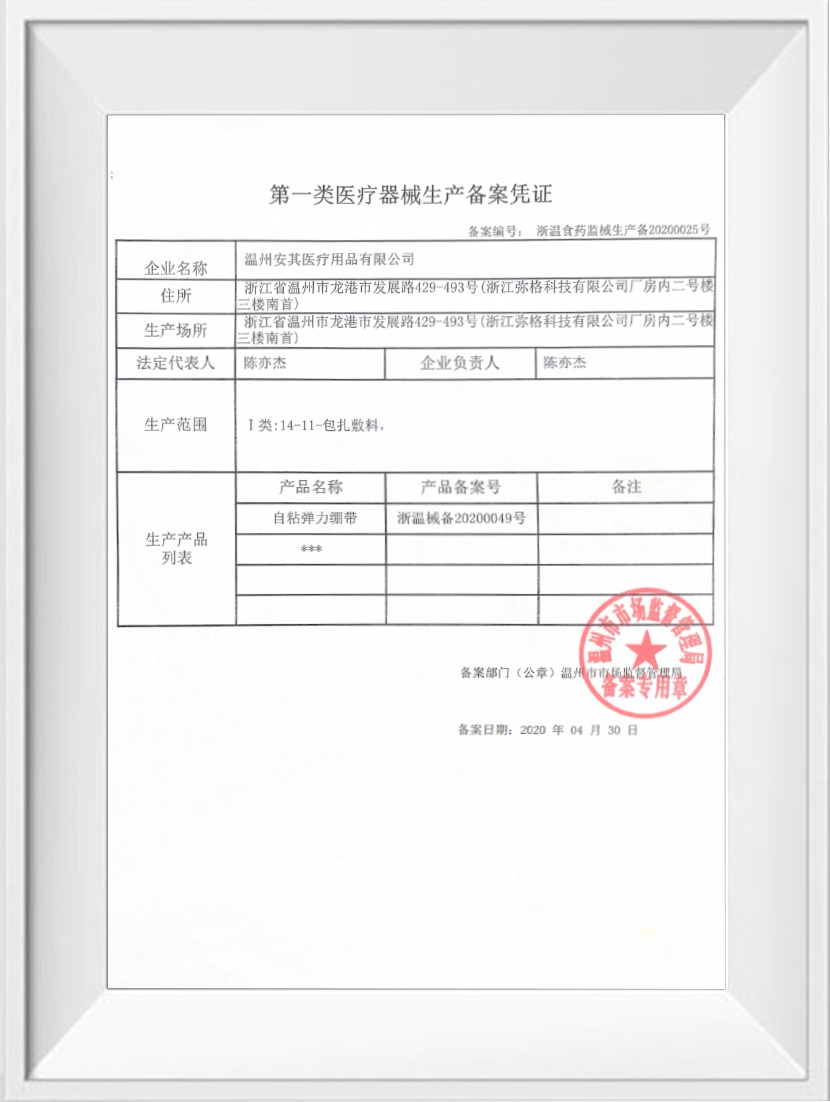
Copyright © Wenzhou Anqi Medical Supplies Co., Ltd. All Rights Reserved.
Approval No: Zhejiang Wenzhou Food and Drug Administration Machinery Production Filing No. 20200025
The information provided on this website is intended for use only in countries and jurisdictions outside of the People's Republic of China.
